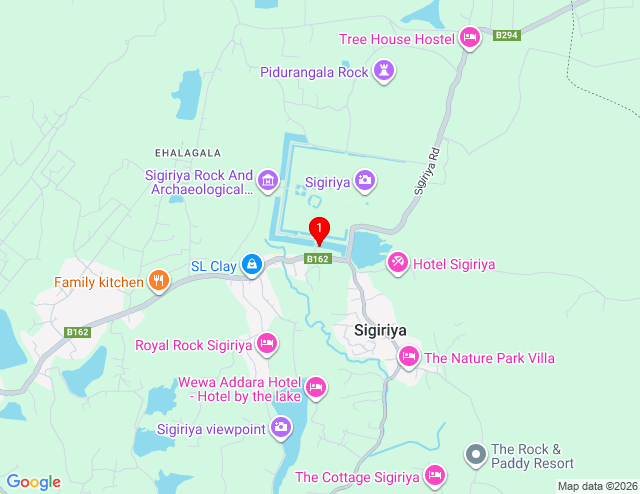
Sigiriya, often called the “Lion Rock,” is one of Sri Lanka’s most remarkable historical and archaeological sites, blending dramatic natural scenery with a fascinating past. Rising nearly 200 meters above the surrounding plains, this massive rock formation has been a place of human activity for over a thousand years.
The history of Sigiriya is most closely associated with King Kashyapa I, who ruled Sri Lanka in the 5th century. According to ancient chronicles, Kashyapa seized the throne after overthrowing his father and, fearing retaliation from his brother, chose Sigiriya as the site of his new capital. He transformed the rock and its surroundings into a fortified royal city, complete with advanced water gardens, landscaped terraces, moats, and defensive walls. These gardens, still partially functional today, are considered some of the oldest surviving landscaped gardens in the world.
At the base and along the sides of the rock, visitors can see beautifully planned gardens and pathways that lead upward. Midway up the rock are the famous Sigiriya frescoes—vivid paintings of celestial maidens believed to represent apsaras or women of the royal court. Nearby is the Mirror Wall, once polished so highly that the king could see his reflection; later visitors inscribed poems and thoughts on it, offering insight into early Sri Lankan literature and society.
The final ascent passes through the Lion’s Gate, where a gigantic stone lion once stood, symbolizing royal power. Only the massive paws remain today. At the summit lie the ruins of the royal palace, pools, and platforms, offering sweeping views of the surrounding landscape.
After King Kashyapa’s death, Sigiriya was abandoned as a royal capital and later became a Buddhist monastery until the 14th century. Rediscovered by archaeologists in the 19th century, Sigiriya is now a UNESCO World Heritage Site and a highlight for travelers interested in history, architecture, and culture. Visiting Sigiriya is not just a climb—it is a journey through one of Sri Lanka’s most captivating chapters of history.