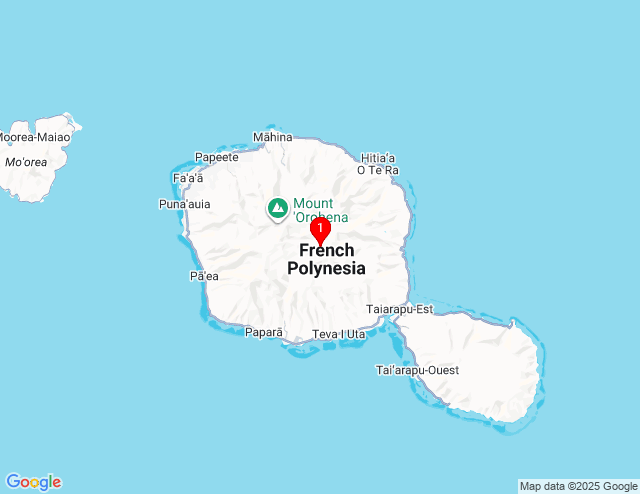
The generally accepted theory states that Polynesians first settled in the Pacific around 4,000 years ago. Using wooden double-hulled sailing canoes lashed together with natural fibers and applying their knowledge of the wind, currents and stars, the first intrepid navigators sailed eastward, settling the central island groups of the Cook Islands and French Polynesia between 500 BC and 500 AD.
Other great expeditions undertaken around 1000 AD established the Polynesian triangle consisting of Hawaii (to the north), Easter Island (to the east), Tahiti and her islands (to the west) and New Zealand (to the south-west.) The various languages derived from the ma'ohi that are spoken in theses islands testify to the common origin of their peoples.
In the 16th century, Magellan reached the Tuamotu Islands and the Marquesas. However, the name of Englishman Samuel Wallis is the one most often associated with the European discovery of Tahiti in 1767. The following year, the French navigator Antoine de Bougainville named it 'New Cythera'. A year later, it was the English Captain James Cook's turn to land and take possession of the Society Islands.
At that time, Tahiti and her islands were divided into several chiefdoms and kingdoms. and an increase in the standard of living.
Step back in time as you explore the rich and fascinating history of Tahiti, the jewel of French Polynesia. Long before European explorers arrived, Tahiti was home to vibrant Polynesian societies known for their skilled navigation, elaborate rituals, and deep connection to the ocean and land. The island’s history is woven with tales of powerful chiefs, ancient marae (sacred temples), and rich oral traditions passed down through generations.
In 1767, the famous explorer Captain James Cook arrived, opening Tahiti to the wider world and European influence. The island later became a French protectorate, blending traditional Polynesian culture with European customs—a mix still visible today in Tahiti’s art, language, and daily life.
Visiting historic sites like the ancient marae of Taputapuātea offers a glimpse into Tahiti’s spiritual past, while museums and cultural centers showcase its evolution through centuries. Exploring Tahiti’s history lets you connect with the island’s soul, a vibrant story of resilience, tradition, and cultural pride set against stunning tropical backdrops.