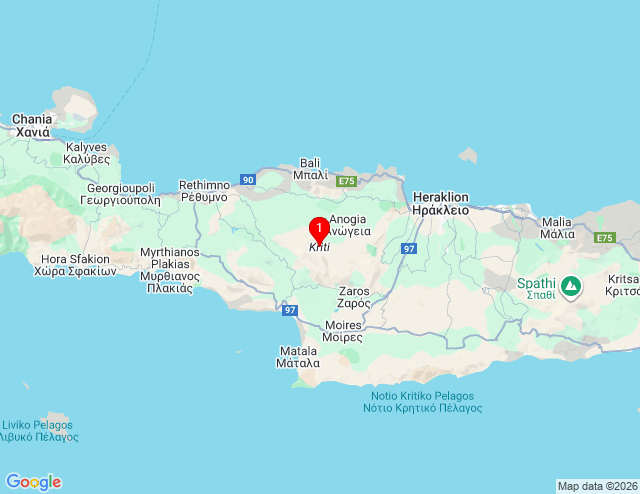
Crete is a destination where history feels woven into the landscape, making travel across the island a journey through thousands of years. It is considered the cradle of Europe’s earliest advanced civilization, the Minoans, who flourished around 3000–1450 BCE. Travelers can explore this era at archaeological sites such as the Palace of Knossos near Heraklion, with its maze-like layout, frescoes, and legends of King Minos and the Minotaur.
After the decline of the Minoans, Crete came under Mycenaean influence, followed by centuries of Roman rule, which brought roads, cities, and early Christianity. Remnants of this period can be seen in ancient theaters, ruins, and early basilicas scattered across the island. Byzantine rule followed, leaving behind fortified towns, churches, and monasteries decorated with vivid frescoes, many of which still stand in remote villages.
From the 13th to the 17th century, Crete was ruled by Venice, a period that deeply shaped its architecture and culture. Venetian harbors, fortresses, and old towns—especially in Chania and Rethymno—remain highlights for visitors today. Ottoman rule came next, adding mosques, fountains, and a new cultural layer, while also fueling centuries of resistance that became central to Cretan identity.
Modern Crete emerged after union with Greece in 1913, but the island’s turbulent past continued through World War II, marked by the Battle of Crete. Today, traveling through Crete means encountering ancient ruins, medieval walls, and living traditions at every turn, offering a rich and immersive historical experience alongside its natural beauty.